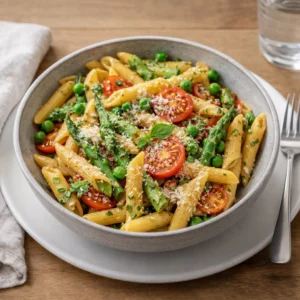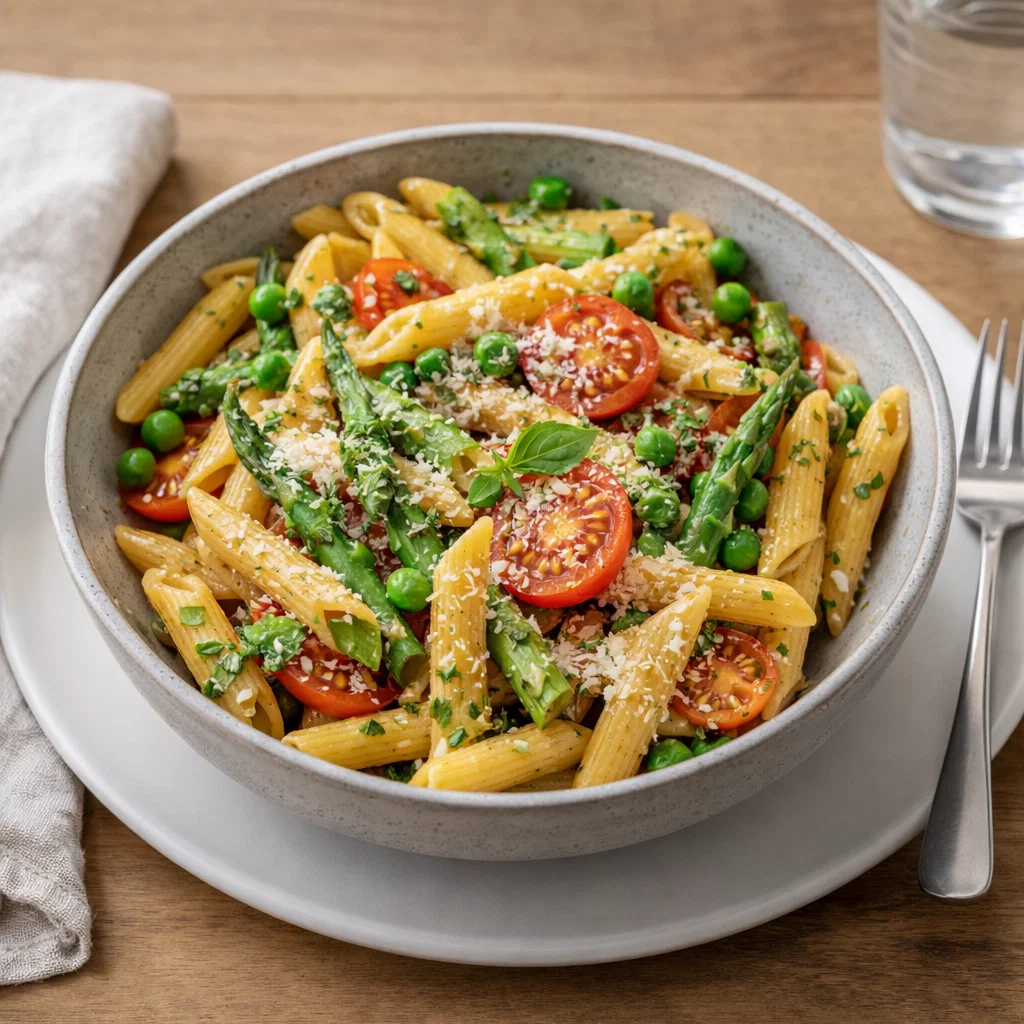
Spring Vegetable Pasta is the absolute best way to shake off those winter blues and welcome the sunshine back into your kitchen. If you are a busy mom or a professional trying to juggle a million things, you know the struggle of wanting a healthy meal that doesn’t take three hours to prep. This Spring Vegetable Pasta recipe is a total game-changer because it is fast, colorful, and surprisingly filling. I first stumbled upon this dish during a particularly chaotic Tuesday when my fridge was a graveyard of random greens, and honestly, it was a revelation. It is light enough for a warm evening but has that comforting pasta hug we all crave after a long day. Since it uses fresh, seasonal produce, every bite feels like a celebration of growth and new beginnings. You will love how the lemon zest zings against the creamy parmesan, making this Spring Vegetable Pasta a permanent resident on your weekly menu rotation.
What is Spring Vegetable Pasta?
At its heart, Spring Vegetable Pasta is a celebration of the season’s finest bounty tossed with your favorite noodle shape. It isn’t a heavy, sauce-laden dish that leaves you feeling like you need a three-hour nap afterward. Instead, it relies on a delicate balance of olive oil, butter, a splash of starchy pasta water, and bright citrus to create a silky coating for the veggies. We are talking about tender spears of asparagus, snappy peas, and bursting cherry tomatoes that provide a natural sweetness. It is essentially a “Pasta Primavera” that actually tastes like vegetables rather than just cream. Because it is so versatile, you can easily swap in whatever looks good at the farmer’s market, making it a reliable staple for anyone who values flexibility in the kitchen.
Reasons to Try Spring Vegetable Pasta
You should absolutely make this Spring Vegetable Pasta because it is a nutritional powerhouse that actually tastes like a treat. First, it is a massive time-saver, going from stovetop to table in under twenty minutes, which is a total victory for anyone with a “hanging-by-a-thread” schedule. Second, it is a fantastic way to sneak more greens into your diet without it feeling like a chore or a punishment. Even the pickiest eaters usually succumb to the charm of butter and parmesan cheese. Third, it is incredibly affordable, utilizing simple ingredients that don’t require a special trip to a luxury grocer. Additionally, the vibrant colors make it a stunning centerpiece if you are hosting a casual brunch or a last-minute dinner party with friends. It’s also one of those rare dishes that tastes just as good, if not better, when eaten cold for lunch the next day, giving you a delicious “freebie” meal for your work week.
Ingredients Needed to Make Spring Vegetable Pasta
- 12 oz Pasta: You can use penne, linguine, or farfalle; just pick something with nooks and crannies to catch the light sauce.
- 1 tbsp Olive Oil: Go for a high-quality extra virgin oil to add a rich, peppery base to the dish.
- 1 tbsp Butter: This adds that tiny bit of indulgence and helps create a silky emulsion with the pasta water.
- 3 Garlic Cloves: Mince these finely to ensure you get a bold, aromatic punch in every single forkful.
- 1 cup Asparagus: Trim the woody ends and cut them into one-inch pieces so they cook evenly and stay tender-crisp.
- 1 cup Cherry Tomatoes: Halving these allows them to release their sweet juices, which act as a natural component of the sauce.
- 1 cup Sugar Snap Peas or Green Peas: These provide a wonderful crunch and a pop of bright green color that screams springtime.
- ½ tsp Red Pepper Flakes: This is optional, but it provides a gentle heat that balances the acidity of the lemon.
- ½ tsp Salt and Black Pepper: Seasoning is the secret to making those fresh vegetable flavors really sing.
- ½ cup Grated Parmesan Cheese: Use the real stuff if you can; it melts better and offers a deeper, nutty saltiness.
- ¼ cup Fresh Basil and Parsley: Chopped herbs are the finishing touch that adds an earthy, aromatic layer of complexity.
- Zest and Juice of 1 Lemon: This is the magic ingredient that ties everything together and makes the dish feel incredibly fresh.
Instructions to Make Spring Vegetable Pasta – Step by Step
Step 1 To begin this Step by Step journey to a perfect dinner, fill a large pot with water and add a generous handful of salt. Bringing the water to a rolling boil is crucial because it seasons the pasta from the inside out. Drop your chosen pasta—whether it’s bowties or penne—into the water and cook it according to the package directions until it reaches that perfect al dente texture. Before you drain the pot, make sure you reserve at least a half-cup of that cloudy, starchy pasta water; this liquid gold is the secret to a professional-grade sauce. Once you have saved your water, drain the noodles and set them aside while you focus on the star of the show: the vegetables.
Step 2 In a large skillet over medium heat, melt the butter into the olive oil until the mixture is shimmering and fragrant. Toss in your minced garlic and sauté it for about thirty seconds, being careful not to let it brown or burn, as bitter garlic is a total mood-killer. Now, add the asparagus, halved cherry tomatoes, and snap peas into the pan. This Step by Step process ensures that the vegetables get a quick sear, locking in their vibrant color while softening them just enough. Stir them occasionally for four to five minutes until they are slightly tender but still have a satisfying snap when you bite into them.
Step 3 Now it is time to bring everything together. Season the sizzling vegetables with your salt, pepper, and red pepper flakes, then slide the cooked pasta into the skillet. Pour in that reserved pasta water along with the parmesan cheese, lemon zest, and fresh lemon juice. Stir everything vigorously; as the cheese melts and combines with the starchy water and fats, it creates a light, creamy glaze that coats every single noodle perfectly. This Step by Step integration of the liquids is what prevents the pasta from being dry or oily.
Step 4 Remove the skillet from the heat immediately to prevent the herbs from wilting too much. Stir in your freshly chopped basil and parsley, letting their aroma waft through your kitchen like a literal breath of fresh air. Give the dish one final toss to ensure the herbs are evenly distributed. Serve your masterpiece immediately while it’s piping hot, and don’t be afraid to shower it with an extra dusting of parmesan or a tiny drizzle of olive oil for that restaurant-quality finish.
What to Serve with Spring Vegetable Pasta
While this Spring Vegetable Pasta is definitely a complete meal on its own, you can easily pair it with a few sides to stretch it further for a larger family. A crusty loaf of sourdough or warm garlic bread is perfect for mopping up any leftover lemon-parm sauce at the bottom of the bowl. If you want a bit more protein, grilled shrimp or sliced herb-roasted chicken breast fits in seamlessly without overpowering the delicate flavors of the vegetables. A crisp arugula salad with a light balsamic vinaigrette also provides a nice peppery contrast to the sweetness of the peas and tomatoes. For a truly indulgent spring feast, consider serving a chilled glass of Sauvignon Blanc, which complements the citrus notes of the pasta beautifully.
Key Tips for Making Spring Vegetable Pasta
The most important tip for a successful Spring Vegetable Pasta is to avoid overcooking your greens. You want that asparagus to be bright green and crisp, not mushy and grey. Another pro-tip is to always grate your own cheese if time permits; the pre-shredded stuff in bags is often coated in potato starch, which can make your sauce clumpy rather than smooth. If you find the pasta looks a little dry after mixing, just add an extra splash of that reserved pasta water to loosen things up. Don’t be shy with the lemon zest either—the oils in the skin carry way more flavor than the juice alone. Lastly, feel free to experiment with different herbs like mint or chives if you have them on hand, as they can completely change the flavor profile and keep the recipe feeling new every time you make it.
Storage and Reheating Tips Spring Vegetable Pasta
If you happen to have leftovers of your Spring Vegetable Pasta, you are in luck because it stores remarkably well. Simply place the cooled pasta in an airtight container and keep it in the fridge for up to three days. When you are ready to reheat, I recommend doing it on the stovetop rather than the microwave. Add a tiny splash of water or a small knob of butter to the pan to help revive the sauce and keep the noodles from sticking together. If you do use the microwave, cover the bowl with a damp paper towel to create steam, which helps maintain the texture of the vegetables. As mentioned before, this dish is also fantastic served cold as a pasta salad, so don’t feel obligated to heat it up at all if you are looking for a quick desk lunch.
FAQs
Can I make this recipe gluten-free? Absolutely! Just swap the standard pasta for your favorite gluten-free alternative, like chickpea or brown rice pasta. Just be careful not to overcook them, as gluten-free varieties can sometimes become mushy more quickly.
What other vegetables can I add? The sky is the limit. Zucchini ribbons, sautéed leeks, or even baby spinach are wonderful additions. Just remember to add quick-cooking greens like spinach at the very end so they only wilt slightly.
Is there a vegan version? Yes, you can easily make this vegan by omitting the butter (use extra olive oil) and replacing the parmesan with nutritional yeast or a high-quality vegan cheese alternative. The lemon and garlic will still provide plenty of depth.
Final Thoughts
Making this Spring Vegetable Pasta is a simple yet profound way to treat yourself to a meal that is both healthy and comforting. It proves that you don’t need a massive list of complicated ingredients to create something truly spectacular and restaurant-worthy in your own home. Whether you are dealing with a hectic work week or just want a meal that feels like a warm hug, this recipe has your back. The combination of fresh produce, zingy lemon, and salty cheese is a timeless trio that never fails to satisfy. So, grab your skillet, head to the produce aisle, and get ready to fall in love with your new favorite weeknight miracle. I hope this dish brings as much joy and ease to your dinner table as it does to mine!
Print
Spring Vegetable Pasta: A Fresh and Vibrant Weeknight Miracle
- Prep Time: 10 minutes
- Cook Time: 15 minutes
- Total Time: 25 minutes
- Yield: 4 servings 1x
- Category: Dinner
- Method: Stovetop
- Cuisine: Italian-inspired
- Diet: Vegetarian
Description
This bright and fresh Spring Vegetable Pasta is packed with asparagus, sweet peas, cherry tomatoes, and herbs tossed in a light lemony Parmesan sauce. It’s a quick, colorful, and satisfying seasonal pasta perfect for an easy dinner.
Ingredients
- 12 oz pasta (such as penne, linguine, or farfalle)
- 1 tbsp olive oil
- 1 tbsp butter
- 3 garlic cloves, minced
- 1 cup asparagus, trimmed and cut into 1-inch pieces
- 1 cup cherry tomatoes, halved
- 1 cup sugar snap peas or green peas
- 1/2 tsp red pepper flakes (optional)
- 1/2 tsp salt (plus more for pasta water)
- 1/2 tsp black pepper
- 1/2 cup grated Parmesan cheese (or more to taste)
- 1/4 cup fresh basil, chopped
- 1/4 cup fresh parsley, chopped
- Zest of 1 lemon
- Juice of 1/2 lemon
Instructions
1. Cook the pasta in a large pot of salted boiling water according to package instructions until al dente. Reserve 1/2 cup of pasta water, then drain and set aside.
2. Heat olive oil and butter in a large skillet over medium heat. Add garlic and sauté for about 30 seconds until fragrant.
3. Add asparagus, cherry tomatoes, and sugar snap peas to the pan. Cook for 4 to 5 minutes, stirring occasionally, until the vegetables are slightly tender but still crisp.
4. Season with red pepper flakes, salt, and black pepper, then add the drained pasta.
5. Pour in the reserved pasta water, Parmesan cheese, lemon zest, and lemon juice. Stir everything together until well coated and lightly creamy.
6. Remove from heat and stir in fresh basil and parsley.
7. Serve immediately topped with extra Parmesan and a drizzle of olive oil if desired.
Notes
You can add shredded or grilled chicken for extra protein if desired.
This pasta also tastes great chilled and can be enjoyed as a pasta salad the next day.
Reserve pasta water because the starch helps create a silky sauce that coats the pasta and vegetables.
Nutrition
- Serving Size: 1 serving
- Calories: 420
- Sugar: 5 g
- Sodium: 420 mg
- Fat: 14 g
- Saturated Fat: 6 g
- Unsaturated Fat: 7 g
- Trans Fat: 0 g
- Carbohydrates: 58 g
- Fiber: 5 g
- Protein: 15 g
- Cholesterol: 20 mg